Ghee is clarified butter: butter with the water and nearly all milk solids removed. That makes ghee almost pure fat, lets it take much higher heat (smoke point around 250 °C against roughly 150 to 175 °C for butter) and lets it keep for a long time outside the fridge. Use ghee for frying and tadka, butter for baking, sauces and spreading.
What are the differences between ghee and butter?
The key difference is water and milk protein: butter has them, ghee barely does. The differences in smoke point, shelf life and taste follow from that.
| Ghee | Butter | |
|---|---|---|
| Fat | About 99 % | About 80 to 82 % |
| Water | Almost none | About 15 to 18 % |
| Energy per 100 g | About 875 kcal | About 720 kcal |
| Smoke point | Around 250 °C | Around 150 to 175 °C |
| Storage | Unopened in the pantry | In the fridge |
| Taste | Nutty, lightly caramel | Creamy, fresh |
| Best for | Tadka, frying, rice, chapati | Baking, sauces, spreading |
Is ghee healthier than butter?
No, not meaningfully. Ghee and butter are the same milk fat, so per gram of fat they are almost identical. Ghee has slightly more calories per tablespoon because it holds no water. The Dutch Nutrition Centre keeps butter out of its Schijf van Vijf food guide because of its saturated fat; ghee is made of the same fat.
Can you eat ghee if you are lactose intolerant?
Many people with mild lactose intolerance tolerate ghee well, because clarifying leaves almost no milk sugar behind. Ghee is not suitable for a milk allergy, as traces of milk protein can remain. If in doubt, ask a doctor or dietitian.
Can you make ghee from butter at home?
Yes. Heat unsalted butter on low heat until the water evaporates and the milk solids turn brown and sink, then strain off the clear ghee. Because butter is about 80 percent fat, 1 kg of butter gives roughly 800 g of ghee.
When should you choose ghee and when butter?
Choose ghee for anything that gets hot: a tadka over dal, stir-frying, cooking paratha or rice. Choose butter where you need its fresh, creamy flavour or its water: biscuits and cakes, a sauce, or on bread.
Products from our shop
View all products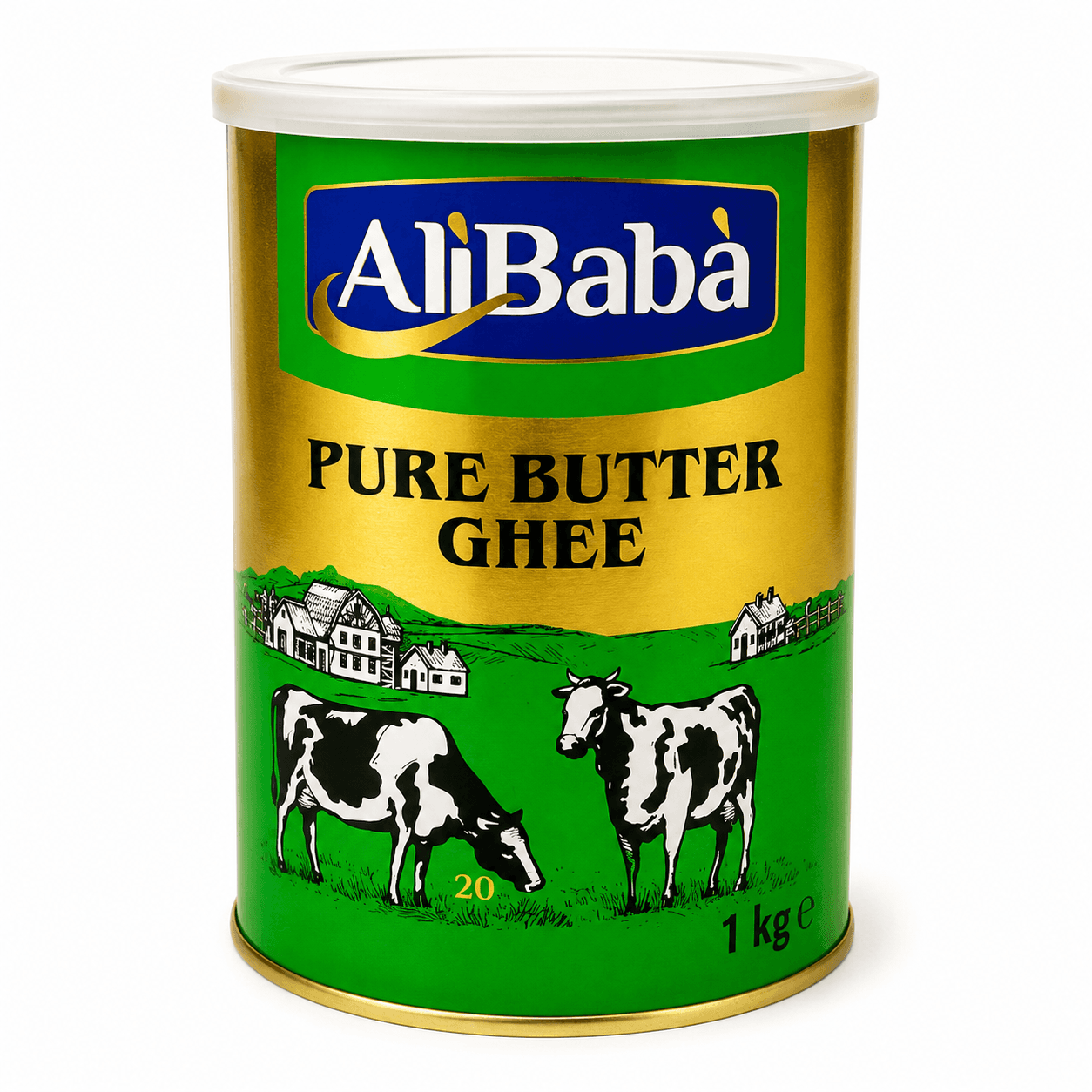
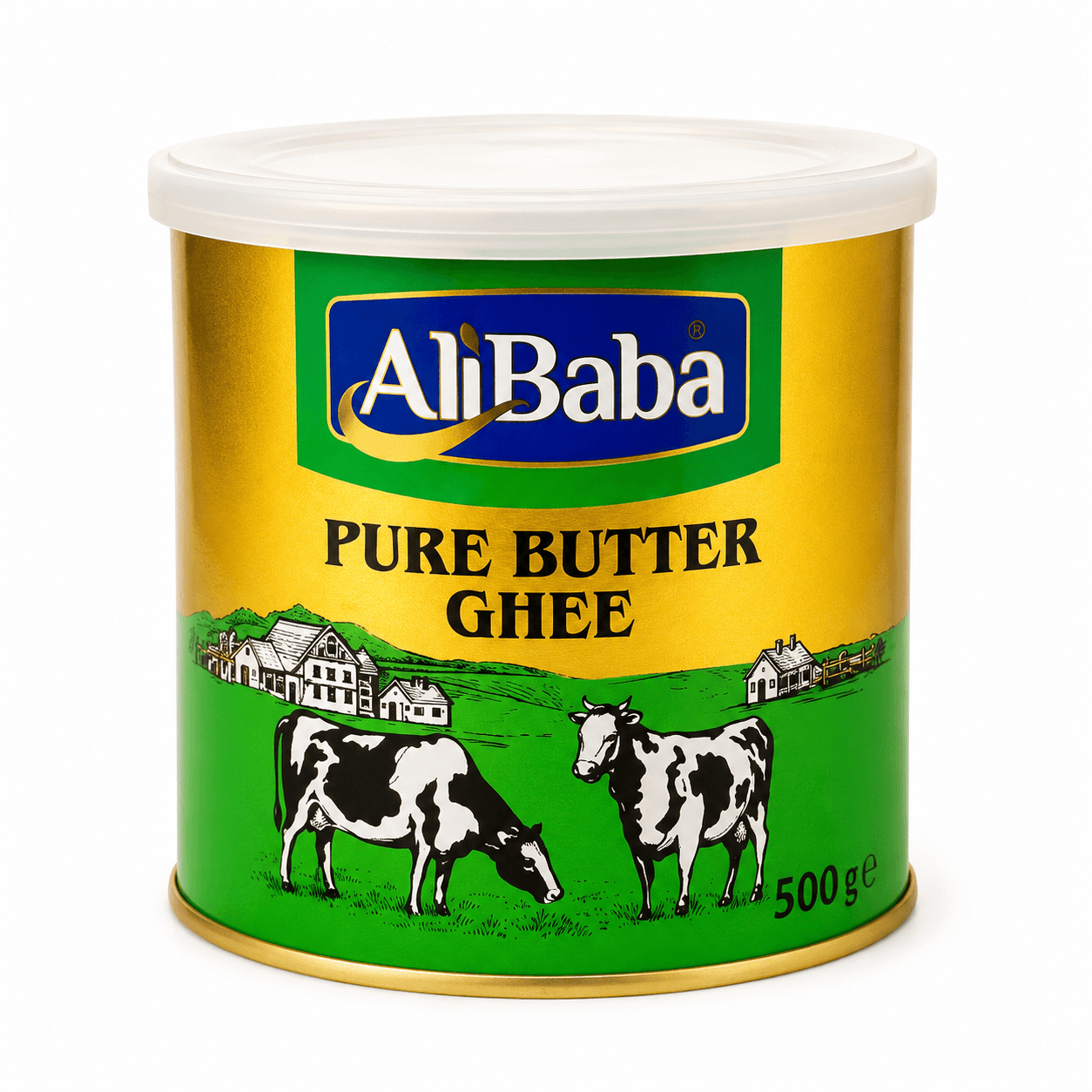
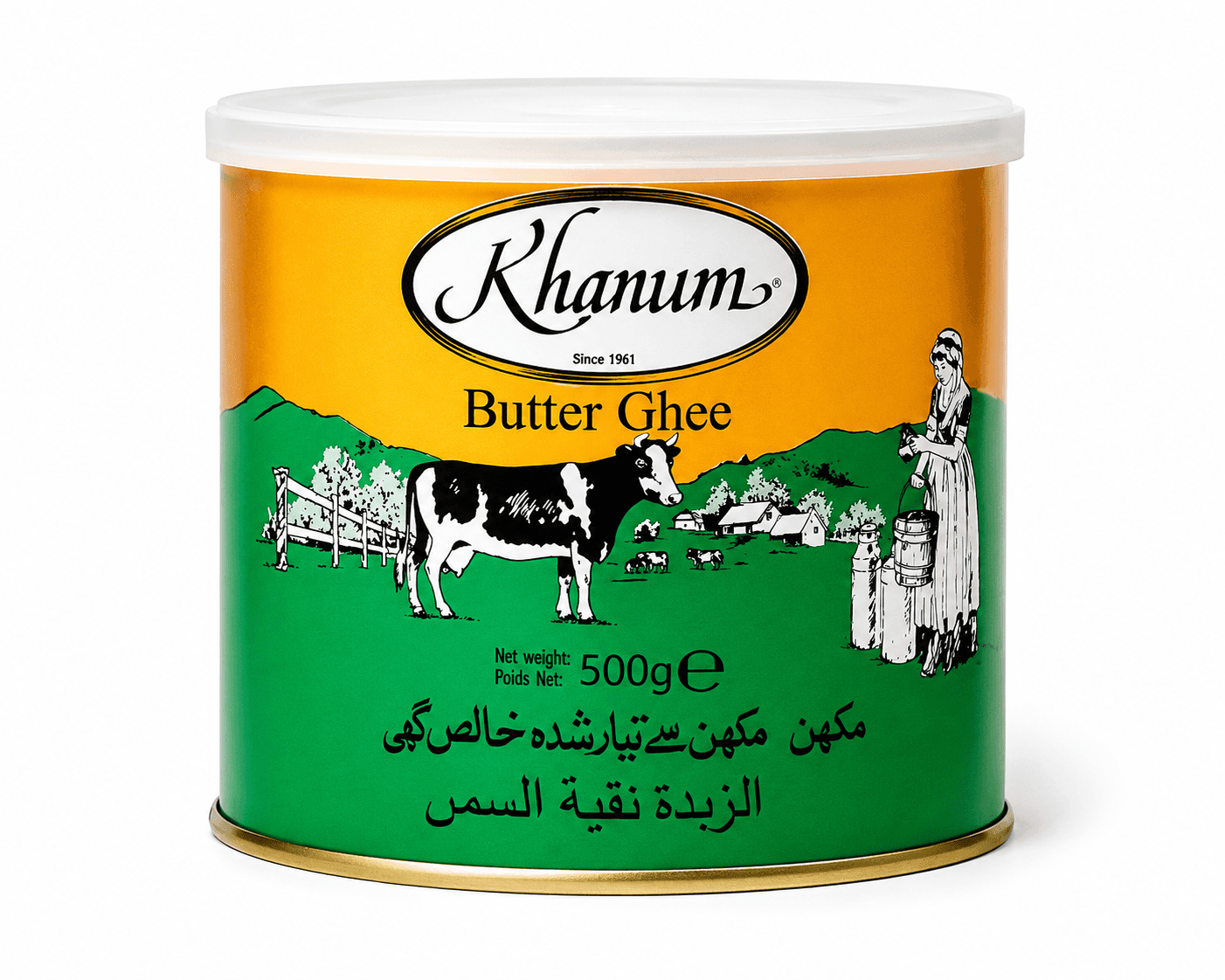
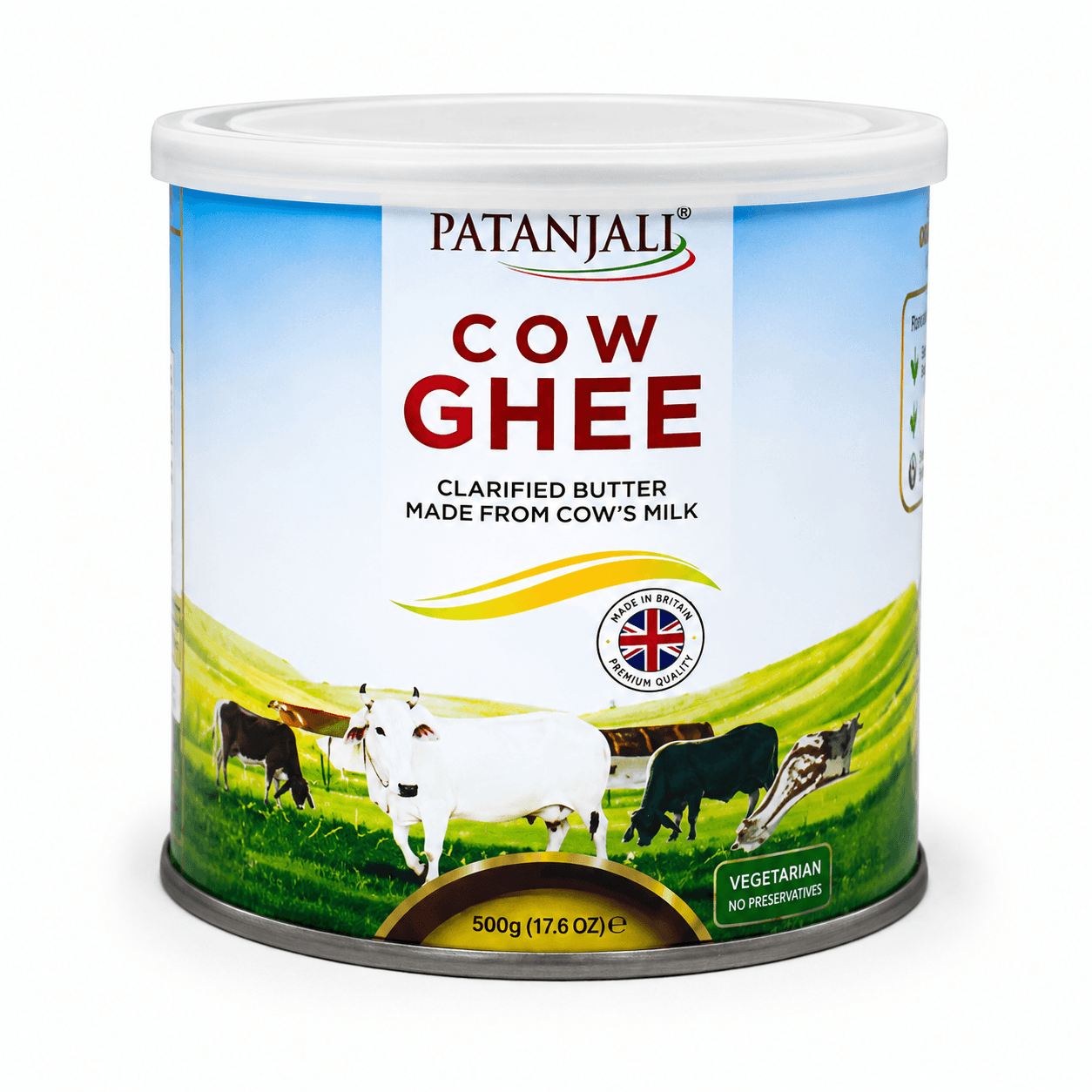
Frequently asked questions
- Can I swap ghee for butter in an Indian recipe?
- In stews and curries, yes, but butter burns faster in a tadka. Use a mix of butter and oil instead.
- Does ghee need to go in the fridge?
- Not unopened. Once opened, a cool dark cupboard works, or the fridge if you use the jar slowly. Follow the instructions on the jar.
- What is the difference between cow ghee and butter ghee?
- Cow ghee is made from cow's milk. Butter ghee is a product name saying the ghee is made from butter; the label states which milk was used.