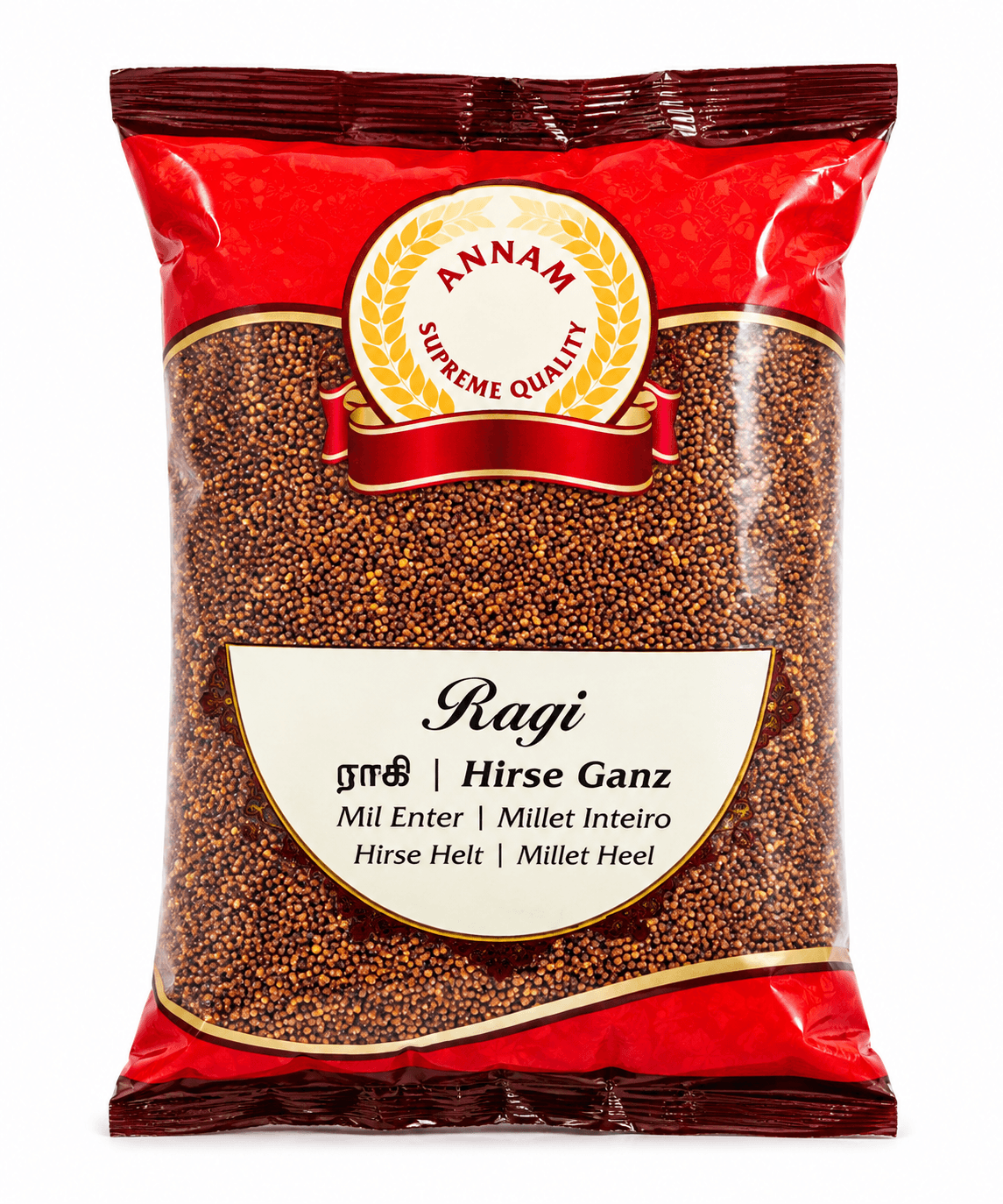
Ragi is finger millet (Eleusine coracana), a small red-brown grain widely eaten in South India and East Africa. In Dutch it is called vingergierst. Ragi is naturally gluten-free and relatively high in calcium for a grain.
What is ragi used for?
Ground ragi is used for ragi roti, dosa, porridge (ragi malt) and biscuits. Whole ragi can be sprouted and dried before grinding, or briefly toasted and ground into flour.
How do you prepare whole ragi?
Rinse whole ragi well, as the grains are tiny. Soak it overnight if you want to sprout it, or dry-toast it and grind it into flour.
Products from our shop
Frequently asked questions
- Is ragi gluten-free?
- Naturally, yes. With a gluten allergy, check the label, as cross-contamination is possible.
- Does ragi taste different from wheat?
- Yes, ragi tastes earthier and slightly nutty and gives a darker, firmer result.